
Mastering the Accounting Cycle: A Step-by-Step Guide

These expenses and revenues are compared to reveal the net income earned or net loss sustained by the entity during the period. The classifying phase of accounting involves grouping similar transactions together. This phase helps to organize financial transactions and makes it easier to prepare financial statements. In this phase, transactions are classified into different accounts such as assets, liabilities, equity, revenue, and expenses. Through the recording phase, businesses can document their financial transactions in a systematic manner.
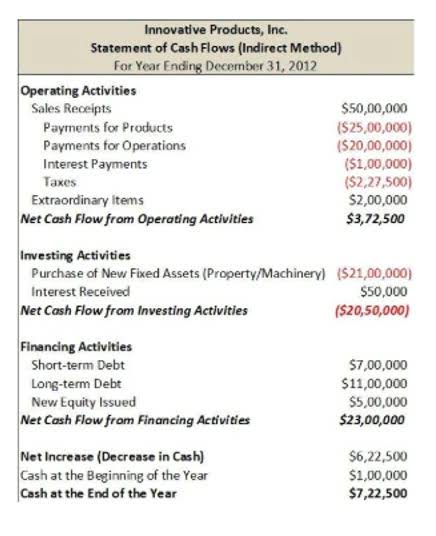
Cash flow statement 🔗
Once the revenue and expense accounts have been closed, the Income Summary account is closed to the Retained Earnings account. By closing this account to Retained Earnings, the net income or loss is transferred to the equity section of the balance sheet. A properly executed accounting cycle ensures financial accuracy, tax compliance, and better business decision-making. Skipping any step can lead to reporting errors, miscalculations, and compliance issues.
What is the bookkeeping cycle?
During the verification process, discrepancies can be identified and rectified more easily. It is recommended that a financial professional conduct this step to ensure accuracy. Closing entries are posted and temporary income and expenditure accounts are closed and their balances transferred to an income and expenditure summary account.

Rebate Management Data Sheet
He also needs to ensure his debits and credits are balanced at the culmination of this step. The modern accountant is likely to be using accounting software instead which allows you to enter adjusting entries and see instantly the updated financial statements at the click of a button. At the end of the accounting period, adjusting entries must be posted to account for accruals and deferrals. Their main objective is to match incomes and expenses to the relevant accounting periods. Preparing an unadjusted trial balance is the next step of the accounting cycle in which a total balance is calculated for all the individual accounts. The nature of transactions may include sales, purchase of raw materials, debt payoff, acquisition of an asset, payment of any expenses etc.
The temporary ledger accounts should be zeroed out if you’ve completed the year-end accounting close process correctly. Verify the beginning balance of retained earnings that will be used starting with the next monthly accounting period close in the following business year. For small business owners, following the 8 steps of the accounting cycle is essential. It ensures accurate tracking of financial transactions, generates reliable financial statements and helps manage cash flow effectively.

It begins when a transaction occurs and finishes when financial statements are prepared and the books are made ready for the next reporting period. A single entry recording system does not include debit and credit columns but instead simple entries for things like cash, tax paid, accounts payable and accounts receivable. Information kept in a single entry bookkeeping system may be used to create statements of income and balance sheets. Keeping accurate entries for debits and credits makes accurate accounting much easier to prove by totaling the credit and debit columns which should be equal. If an error was made during the entry of data into either column it will be easy to find. Double entry bookkeeping also makes record keeping more orderly and is very useful when creating profit and loss statements, or equity, assets and liabilities statements.
What are the 3 steps in the accounting process?
- After recording, each transaction is posted to the relevant account in the general ledger.
- The objective behind the matching concept is to prevent misstating the earnings.
- The process occurs over one accounting period and will begin the cycle again in the following period.
- In our five-step approach, the last step in the accounting cycle is to prepare financial statements.
- The four steps must be executed sequentially to arrive at the final purchase price allocation.
- Types of subsidiary journals include aged accounts receivable, aged accounts payable, cash disbursements, and fixed assets & accumulated depreciation.
When recording transactions, remember to keep them in chronological order and, if using double-entry accounting, which most businesses do, make two entries each time. A credit in one account offsets a debit in another, so all credits must unearned revenue equal the sum of all debits. The timing for recording transactions depends on whether the company uses accrual or cash accounting. With accrual accounting, journal entries are made when a good or service is provided rather than when it is paid for.
Posting to ledgers
- Any mistakes early on in the process can lead to incorrect reporting information on financial statements.
- This comprehensive guide will explore the bookkeeping process in depth, from the initial collection of source documents to the preparation of financial reports.
- Accurate recording enables the creation of detailed and reliable financial reports later in the cycle.
- But what exactly does the bookkeeping process involve, and how can companies streamline it?
- Compare each of the bank accounting statements to its general ledger cash account.
- Whether done manually using journals or digitally with accounting software, it is crucial to keep track of all financial activities accurately.
- Posting is the process of forwarding journal entries from journal book to ledger book, commonly known as general ledger.
For example, you might run the accounting cycle every month to prepare management reports, then again Record Keeping for Small Business at year-end to create annual statements for tax filing. Communicating relevant information through accounting reports, such as the income statement and the balance sheet, for decision-making purposes. We covered the types of accounting statements in Accounting summarised in the financial statements.
- This stage of the bookkeeping process allows you to ensure accuracy and identify any mistakes that need to be corrected.
- The accounting cycle is a series of steps setting out the procedures required for a typical small business to collect, record, and process its financial information.
- Journalizing accounting definition refers to the process of recording transactions in chronological order in the general journal.
- Think of the ledger as a filing system where every account has its own folder.
Question: The direct write-off method of accounting for uncollectible accounts?
This is a list of all ledger accounts and their balances at a specific point in time. The trial balance serves as a checkpoint to ensure that total debits equal total credits, indicating that the accounting equation is balanced. Every business follows a structured accounting cycle to maintain accurate financial records and generate reliable financial statements. Each step plays a crucial role in ensuring transactions are recorded correctly before the end of How to Meet Your Bookkeeping Needs the accounting period.

‘Balancing’ a ledger account is a formal process done at the end of the accounting period. In essence, by zeroing out these accounts, they are reset to begin the next accounting period. In contrast, asset, liability, and equity accounts are called real accounts, as their balances are carried forward from period to period. For example, one does not “start over” each period reaccumulating assets like cash and so on; their balances carry forward.